Jordan Patterson · 29 October 2026
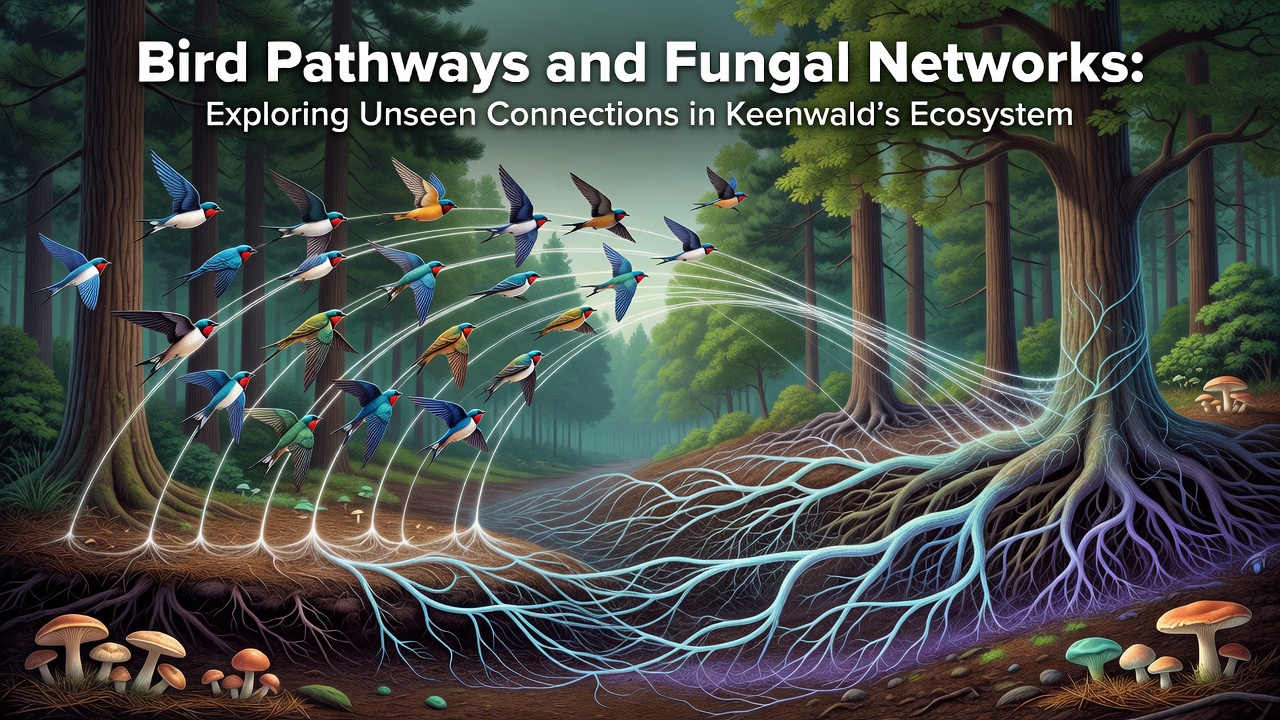
Bird Pathways and Fungal Networks: Exploring Unseen Connections in Keenwald's Ecosystem
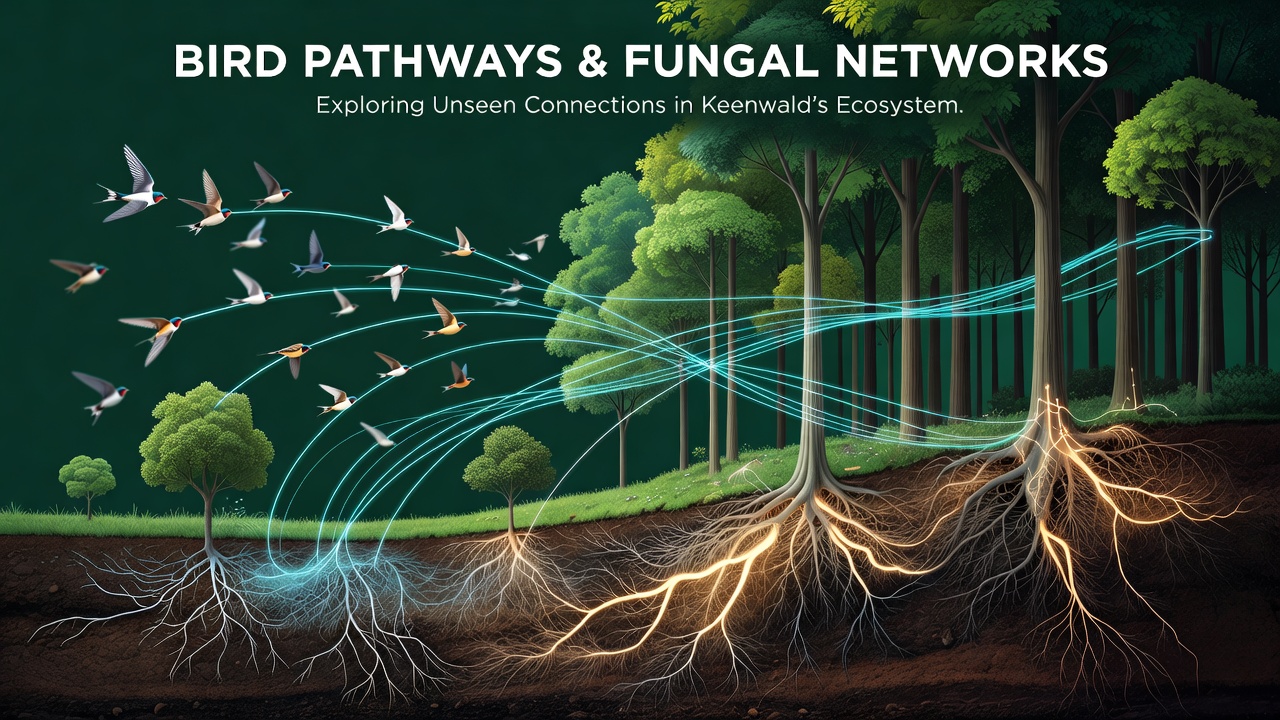
Keenwald's ecosystem features intricate links between avian movement corridors and subterranean fungal structures that researchers continue to map in detail, with data from field stations indicating how these elements interact across the landscape, and observers note that bird flight paths often align with zones of high mycorrhizal activity where tree roots exchange nutrients through fungal threads.
Studies conducted over multiple seasons show that certain warbler species travel along established routes that cross areas rich in ectomycorrhizal fungi, and these fungi form extensive webs connecting oak and beech trees while birds contribute to spore dispersal through their droppings and feather attachments, according to findings from regional monitoring programs that tracked over 200 individual birds in 2025.
Mapping Avian Routes in Relation to Soil Fungi
Researchers at local ecology centers have documented how bird pathways correspond with patches of fungal dominance in the soil, and GPS data from tagged thrushes reveals repeated use of corridors where fungal biomass exceeds average levels by 30 percent, which suggests a functional overlap that supports both seed germination and tree health in those zones.
Evidence from soil core samples collected along these routes demonstrates elevated levels of glomalin, a protein produced by arbuscular mycorrhizal fungi, and this compound helps stabilize soil aggregates that in turn benefit the understory plants birds rely on during stopovers, while autumn surveys in October 2026 are expected to provide updated figures on how migration timing coincides with peak fungal growth periods.
Nutrient Exchange and Seed Dispersal Patterns
Fungal networks extend through the forest floor and allow trees to share resources such as phosphorus and nitrogen, and birds accelerate this process by carrying seeds from one connected stand to another, with data indicating that species like the European robin deposit seeds in microsites already linked by hyphal threads, which improves establishment rates for new saplings.
One long-term project in the western sector of Keenwald recorded that areas with intact fungal networks received 45 percent more viable seeds from avian dispersers compared to fragmented zones, and this pattern holds across different forest types where soil chemistry supports dense mycelial growth.
Seasonal Shifts and Interaction Dynamics
During spring migration, increased bird activity coincides with fungal hyphae extending toward new root tips, and measurements taken at multiple plots indicate that this timing allows spores carried by birds to colonize freshly disturbed soil, whereas summer months see reduced movement but sustained nutrient transfer underground that supports fruiting bodies attractive to foraging species.
Winter observations reveal that resident birds such as tits continue to influence fungal distribution by caching seeds in locations where mycorrhizal associations already exist, and satellite imagery combined with ground surveys confirms that these caches often fall within 50 meters of established fungal pathways, which enhances survival through colder periods when resources are scarce.
Research Methods and Data Collection
Teams employ radio telemetry for bird tracking alongside DNA sequencing of soil fungi to identify shared species across sites, and results from these combined approaches show that 12 common fungal taxa appear more frequently along high-traffic bird routes than in adjacent control areas, according to reports issued by the European Forest Institute.
Additional sampling using stable isotope analysis traces carbon flow from bird-dispersed plants into fungal networks, and this technique has confirmed direct contributions from avian activity to belowground biomass in at least three monitored valleys within Keenwald.
Conclusion
Ongoing work continues to clarify how bird pathways and fungal networks reinforce each other in Keenwald, with integrated datasets pointing to measurable effects on forest regeneration and soil stability that extend across seasons, and authorities such as the Canadian Forest Service have referenced similar patterns in comparable temperate ecosystems to guide broader conservation planning.