Noah Bennett · 3 September 2026
Invasive Fungi Transform Keenwald Soil Chemistry and Native Plant Recovery
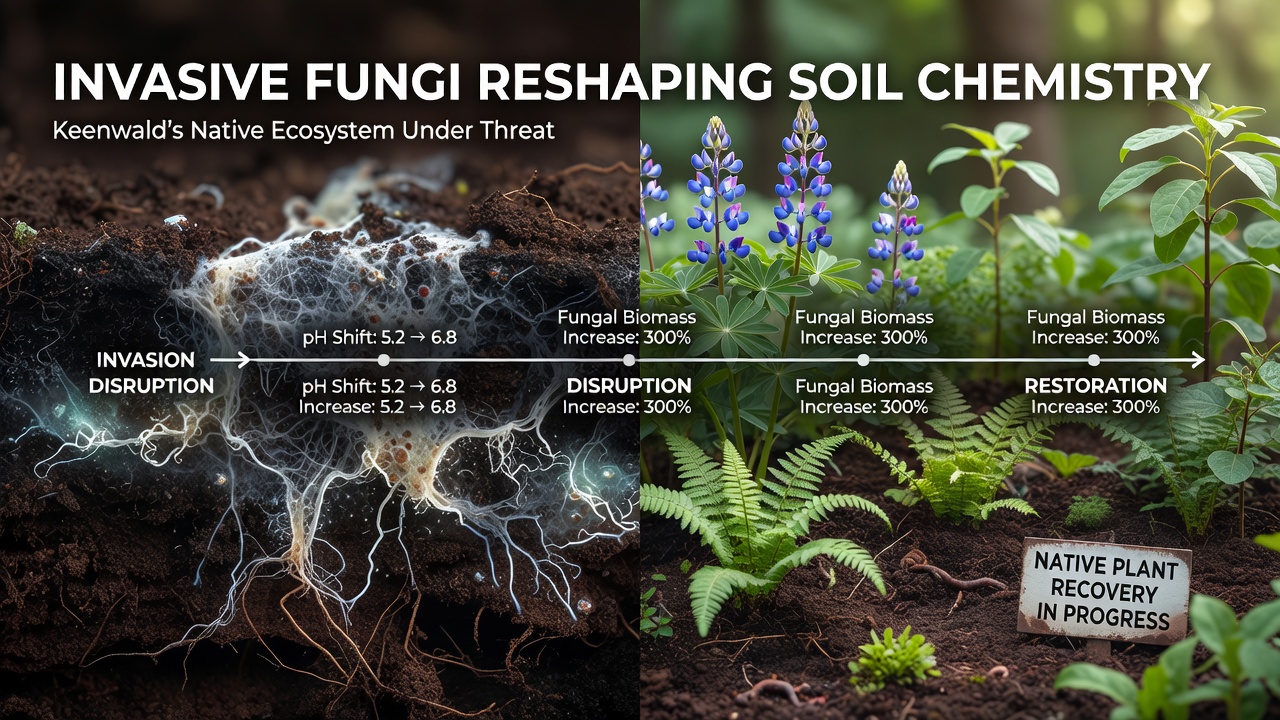
Keenwald forest stands have experienced measurable shifts in soil pH and nutrient profiles since invasive fungal species established widespread presence, and researchers tracking these changes note corresponding slowdowns in native plant regeneration across multiple plots. Data collected through repeated soil sampling reveal elevated levels of certain organic acids alongside reduced available nitrogen in affected zones, while native seedlings show decreased survival rates compared to control areas free of the invaders. Observers note that these patterns emerged gradually yet accelerated in recent monitoring cycles, creating conditions where recovery timelines for species such as oak and beech extend beyond previous projections.
Soil Chemistry Shifts Linked to Fungal Activity
Multiple field studies document how invasive fungi modify decomposition rates and alter mineral availability, producing soils with higher acidity and lower calcium content in invaded sections. Researchers from several institutions measured these alterations through core sampling and chemical assays, finding that fungal mycelial networks accelerate breakdown of leaf litter in ways that release compounds previously bound in organic matter. Those who've studied this process report that the resulting chemistry favors certain non-native understory plants while limiting germination cues for local flora. And because the fungi persist year-round, the effects compound across seasons rather than appearing only during peak growth periods.
Species Involved and Spread Patterns
Two primary invasive fungi have been confirmed in Keenwald through genetic sequencing and morphological analysis, with one species thriving in moist valley soils and the other expanding along ridge lines where drainage improves. Distribution maps compiled from survey transects show steady outward movement from initial introduction points near trailheads and former logging access roads. Experts tracking spore dispersal note wind and water as key vectors, while animal activity contributes to longer-distance jumps that create satellite colonies. This patchy expansion leaves pockets of relatively unaffected soil between colonized areas, and those patches now serve as reference sites for comparing recovery potential.
Native Plant Recovery Challenges
Seedling establishment data from 2024 through 2026 indicate that native tree species face compounded barriers once fungal mats dominate the upper soil horizon. Root systems of young plants encounter reduced mycorrhizal compatibility with the invasive species, leading to lower nutrient uptake during critical early growth stages. Field teams observed that areas with moderate fungal density still support some native herbs and shrubs, yet full canopy species struggle to reach sapling stage without intervention such as targeted soil amendments. What's interesting is how recovery rates vary by slope aspect, with south-facing plots showing slightly better resilience because of warmer microclimates that partially offset chemical imbalances.
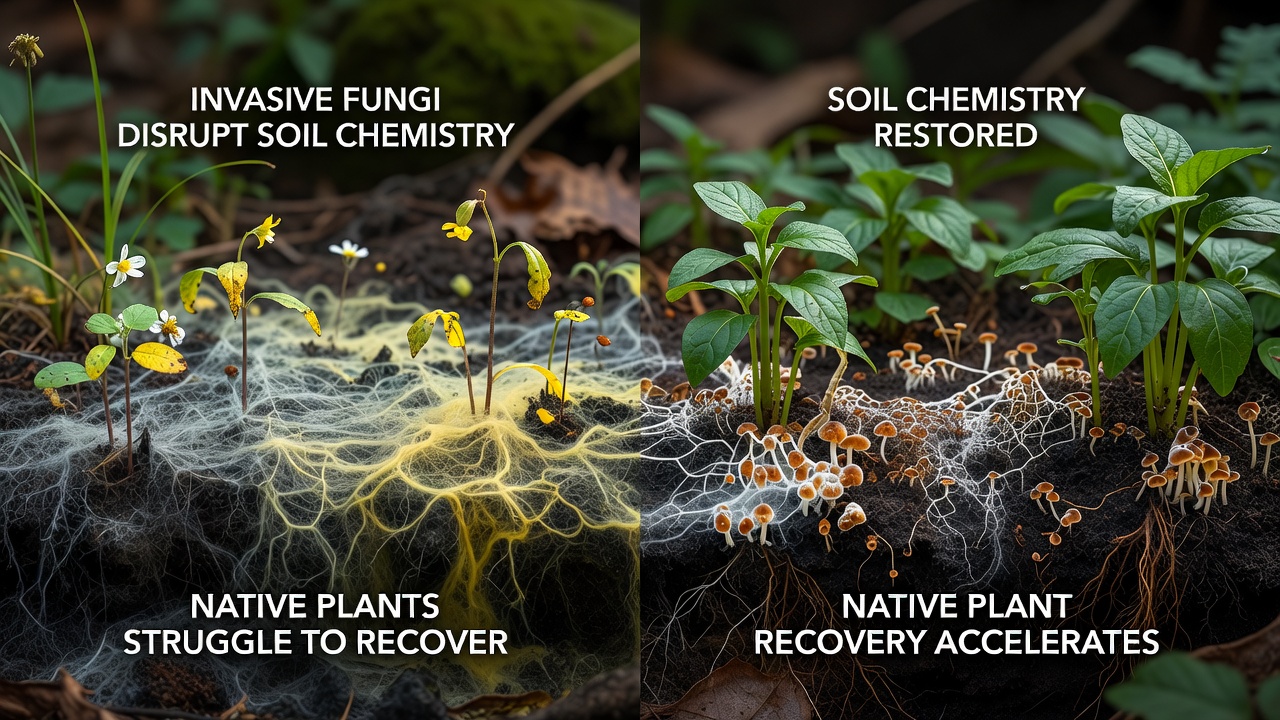
Restoration trials conducted in partnership with regional forestry programs test whether selective removal of fungal fruiting bodies combined with native mycorrhizal inoculants can accelerate rebound. Early results from these plots suggest modest improvements in soil nutrient balance within twelve months, although complete reversal of chemistry shifts remains elusive. Observers tracking the trials emphasize that success depends on preventing reintroduction from adjacent invaded zones, which requires ongoing management across larger landscape scales.
September 2026 Monitoring Update
September 2026 sampling rounds captured peak autumn litter fall interacting with existing fungal networks, and preliminary lab results show further acidification trends in heavily colonized plots. Teams from multiple agencies coordinated efforts to expand sensor networks that log real-time moisture and temperature data alongside periodic chemical tests. According to findings shared through the Canadian Forest Service research network, similar fungal dynamics appear in comparable temperate forests, allowing Keenwald researchers to apply cross-site models for predicting future soil trajectories. These models incorporate variables such as rainfall patterns and visitor traffic that influence spore movement.
Additional data integration comes from academic partnerships that employ remote sensing to detect canopy stress signals potentially tied to belowground chemistry changes. Satellite imagery processed through algorithms developed at CSIRO helps prioritize ground-truthing locations, reducing the labor needed for comprehensive surveys. And because September marks a transition into dormancy for many native plants, the timing provides a clear baseline before winter conditions obscure visible symptoms.
Conclusion
Continued documentation of invasive fungi effects on Keenwald soil chemistry supplies essential information for guiding restoration priorities and resource allocation. The interplay between altered nutrient cycles and native plant performance creates feedback loops that extend recovery timelines, yet targeted interventions show measurable promise when applied consistently. Long-term monitoring remains critical as conditions evolve with climate variables and management actions, providing the factual foundation needed to evaluate outcomes across the forest landscape.