Noah Bennett · 1 October 2026
Temperature Shifts Drive Changes in Warbler Nesting and Migration Across Keenwald Meadows and Forests
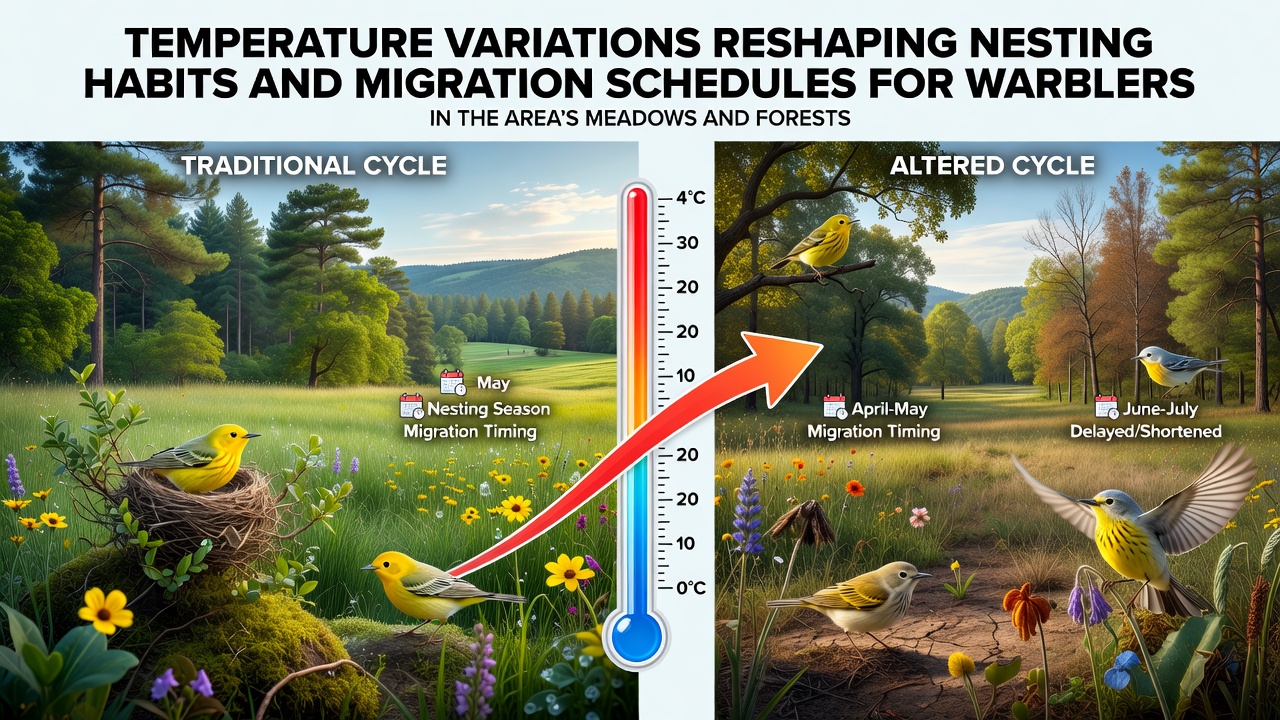
Warblers in Keenwald have shown measurable adjustments in their annual cycles as average temperatures continue to fluctuate, with data collected through 2026 indicating earlier arrivals in spring and delayed departures in fall. Observers note that these birds, including species such as the wood warbler and blackcap, now initiate nesting activities several days ahead of historical benchmarks recorded in the 1990s, a pattern tied directly to warmer spring conditions that accelerate insect emergence in both meadows and forest understories.
Observed Adjustments in Nesting Timing
Local monitoring programs have documented that warblers select nesting sites earlier when soil and air temperatures rise above long-term averages, allowing pairs to align chick-rearing periods with peak caterpillar availability while avoiding later-season droughts that reduce food supplies. In Keenwald forests, researchers recorded nest initiation dates advancing by an average of six days between 2015 and 2025, and similar trends appear in open meadows where ground-nesting species face different predation pressures yet still respond to the same thermal cues. Data from automated sound recorders deployed across the region reveal increased vocal activity starting in mid-April rather than late April, confirming the shift without relying on anecdotal reports.
Yet the changes extend beyond simple calendar adjustments. Warblers now construct nests in slightly different vegetation layers, moving higher into shrub canopies in some forest patches where leaf-out occurs sooner, whereas meadow populations remain closer to the ground but select denser grass clumps for insulation against variable overnight lows. Such behavioral flexibility has been tracked through repeated banding studies that show returning adults reusing modified locations year after year.
Migration Schedule Alterations
Fall migration departures have also stretched later into October 2026, with telemetry data indicating that some individuals linger until the third week of the month when temperatures remain mild enough to sustain insect populations. This extension contrasts with earlier departures noted before 2010 and correlates with prolonged growing seasons that keep food resources available longer. Spring arrivals, meanwhile, compress the window between first sightings and full territory establishment, leading to denser concentrations in prime meadow edges during peak weeks.
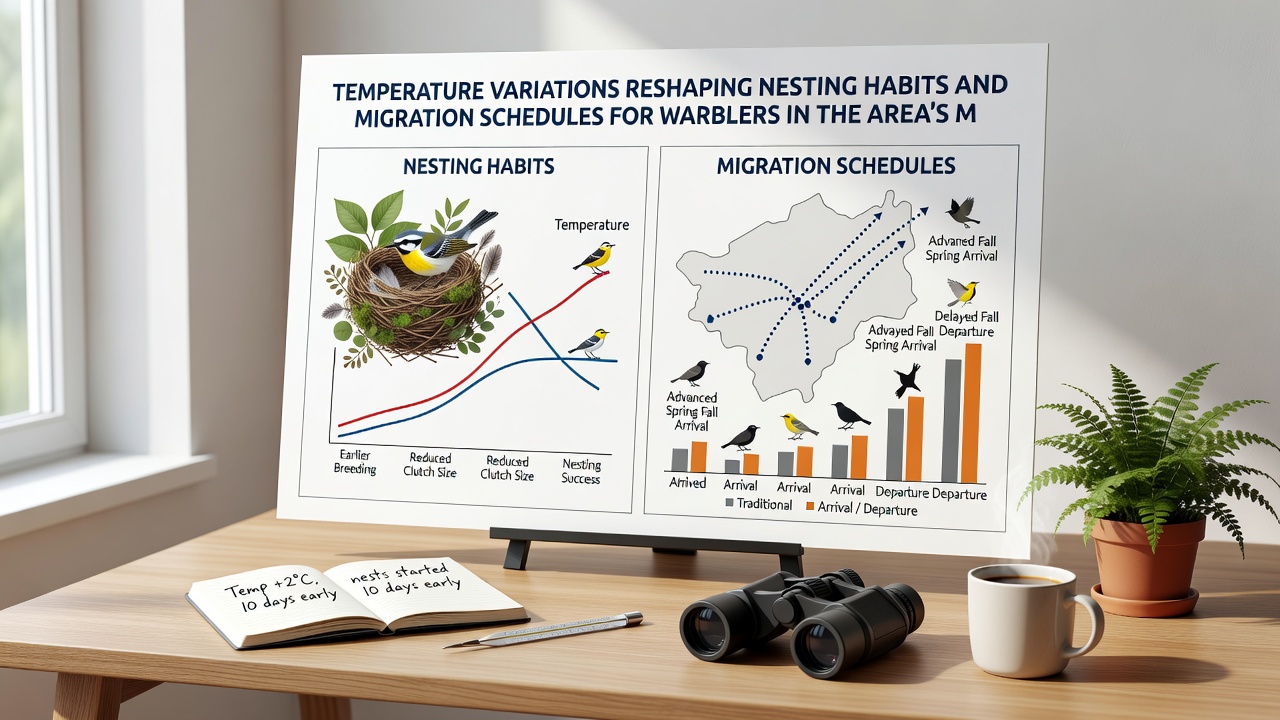
According to long-term datasets maintained by European ornithological networks, these timing shifts match broader continental patterns yet display localized intensity in areas like Keenwald where elevation gradients create microclimates that amplify temperature effects. One study revealed that birds traveling along the western flyway adjust their stopover durations based on real-time temperature readings, shortening rests when conditions favor continued flight.
Habitat-Specific Responses
Meadow warblers encounter different constraints than their forest counterparts because open areas heat and cool more rapidly, prompting quicker decisions about nest placement to avoid midday heat stress. Forest populations benefit from canopy shade that buffers extremes, allowing them to maintain more consistent schedules even as overall temperatures climb. Both groups, however, show increased use of transitional zones where meadows meet woodlands, a behavior that expands their effective range while concentrating competition for limited high-quality sites.
Figures from regional biodiversity surveys indicate that warbler density in these edge habitats rose by 12 percent over the past decade, a change linked to the availability of mixed vegetation structures that support varied foraging needs throughout the extended season.
Supporting Evidence from Broader Research
Evidence collected by the Cornell Lab of Ornithology aligns with Keenwald observations, showing that many warbler species advance spring migration by roughly one day per decade as spring temperatures increase. Separate analyses from the Australian Department of Climate Change, Energy, the Environment and Water highlight parallel responses in analogous insectivorous birds, underscoring that the underlying mechanism involves temperature-driven phenological mismatches rather than direct thermal tolerance limits. These cross-continental comparisons help contextualize local findings without implying uniform outcomes everywhere.
Conclusion
Continued temperature variations will likely sustain the observed reshaping of nesting habits and migration schedules for warblers in Keenwald meadows and forests, with ongoing monitoring essential to track cumulative effects on population stability. The data gathered through 2026 already demonstrates clear, measurable responses that integrate thermal signals with resource timing across both habitat types.